
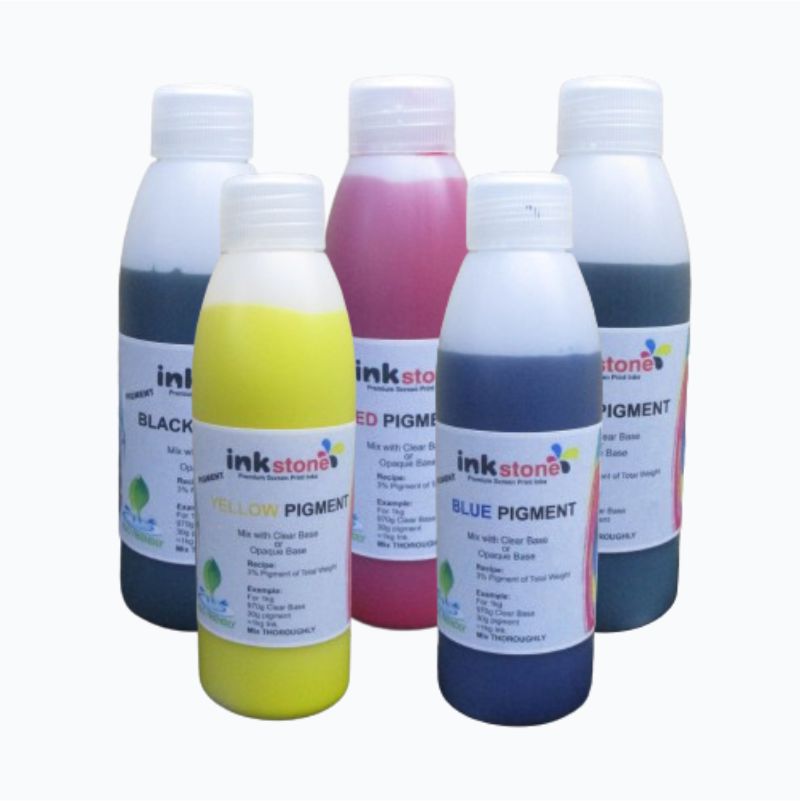




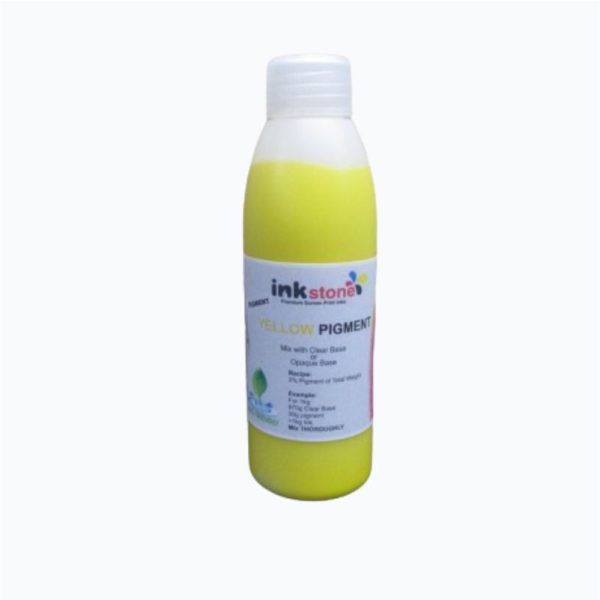
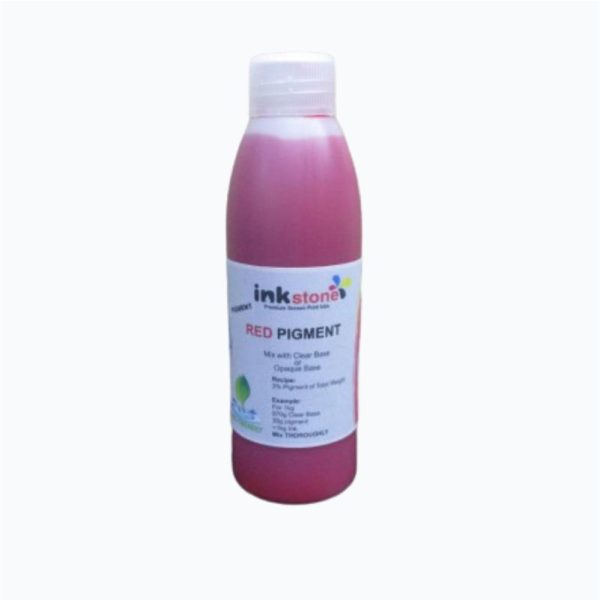

Water Based Screen Printing Pigments
Our water based screen printing pigments are high-quality industrial-grade products, carefully designed for seamless blending with our clear and opaque bases of any chosen color for screen printing. Mixing inks or pigments to create different colors can be a useful skill for any shop. Sometimes, you might need a specific ink color for a small job that you don’t usually print, or you may have a one-time project that requires a shade you don’t have in stock. By mixing the inks yourself, you can easily get the color you need without having to place a special order.
The primary colors used in color mixing are red, yellow, and blue. When dealing with screen print inks or pigments, these primary colors can be blended to generate a variety of additional colors. When you blend two primary colors, you obtain secondary colors. The secondary colors are orange, purple, and green.

A tertiary color is created by combining a main color and a secondary color. These are the colors commonly use in Screen printing.

Brown inks are made by combining one main color and a secondary color. For example, combining purple with yellow produces gentler, yellowish browns, which are common in many objects. When red is combined with green, it creates a warm, earthy brown that works well with natural themes. Blending blue and orange produces a neutral brown that works well for stone-like effects. You can reclaim any leftover ink that is too brown or an uncommon shade. You can combine several colored inks to get a darker brown, which you can deepen even more with a plastisol tinting base.
Black is created by combining all colors, yielding a rich black. However, adding a black tint to leftover inks can result in high-quality black ink.
Adding white to any color creates a pastel version of that color. A better method is to mix your color into a base of white rather than adding white to a color, as this can lead to a lot of excess ink.


Reviews
There are no reviews yet